
About Uluru
About Uluṟu–Kata Tjuṯa National Park
The Uluru-Kata Tjuta landscape is a significant place of knowledge and learning. All the plants, animals, rocks, and waterholes contain important information about life and living here now and for all time, especially for Anangu. Anangu is the term that Pitjantjatjara and Yankunytjatjara Aboriginal people, from the Western Desert region of Australia, use to refer to themselves. Pitjantjatjara and Yankunytjatjara are the two principal dialects spoken in Uluru-Kata Tjuta National Park.
Uluru-Kata Tjuta National Park is a living cultural landscape representing the combined works of Anangu and nature over millennia. The park is inscribed on the World Heritage List under the World Heritage Convention for its outstanding natural and cultural values. It is one of the few sites that are listed under the World Heritage Convention for both cultural and natural values.
The park is owned by the Uluru-Kata Tjuta Aboriginal Land Trust. It covers about 1,325 square kilometres and is located 335 kilometres by air or about 446 kilometres by road to the south-west of Alice Springs. The Ayers Rock Resort at Yulara adjoins the park’s northern boundary. Both the park and the resort are surrounded by Aboriginal freehold land held by the Petermann and Katiti Land Trusts.
Cultural Values
According to Anangu, the landscape was created and shaped at the beginning of time by ancestral beings. Anangu are the direct descendants of these beings and they are responsible for the protection and appropriate management of these lands. The knowledge necessary to fulfil these responsibilities has been passed down from generation to generation through Tjukurpa.
Tjukurpa unites Anangu with each other and with the landscape. It embodies the principles of religion, philosophy and human behaviour that are to be observed, in order to live harmoniously with one another and with the natural landscape.
Tjukurpa - the foundation of Anangu life
Turkurpa has many complex but complimentary meanings. There is no simple translation into English. Tjukurpa embodies the principles of religion, philosophy and human behavior that are observed for people to live harmoniously with each other and the land. Tjukurpa encompasses Anangu law, lore, cultural, morality, ceremony, inma, creation time stories, art and cultural knowledge. It sets out rules for living, rules for social interacting and how to care for country. It refers to the past, present and future.
Tjukurpa and creation
Tjukurpa tells of how creation ancestors erupted from the featureless surface of earth and travelled across it, having adventures and leaving their mark on the landscape in many forms. The features of the park tell this story.
Tjukurpa as a world view
Tjukurpa details how important parts of social behaviours and the proper ways of doing things originated. It contains the way the social and physical worlds came into being, as well as the form which the land and human relationships took in the beginning. It provides the basis for the world view of Anangu.
Tjukurpa as an ethical belief system
Tjukurpa contains propositions for what is right and wrong. Like other systems of morality and justice, it provides Anangu with an ethical system for what should and shouldn’t be. Tjukurpa could be understood as metaphors and symbolic stories, much as the parables of Jesus Christ serve as ethical guides for Christians.
Tjukurpa as law
Tjukurpa is a legal system containing rules to guide correct procedures for dealing with problems. It sets out the nature of possible problems, as well as penalties for breaking rules. Tjukurpa also establishes rules to manage the land.
Passing on Tjukurpa
Tjukurpa is an oral tradition and there are obligations to pass on this knowledge to the right people. Ceremonies play an important role in passing on knowledge to specific people. Groups in the kinship system have responsibility to maintain different parts of Tjukurpa. There are many interrelated ways for remembering Tjukurpa, such as specific verses of inma, site-related stories, ritual dances or art.
Tjukurpa is extremely important to Anangu, who can share some information with non-Aboriginal people but have an obligation to protect sacred information.
Natural Values
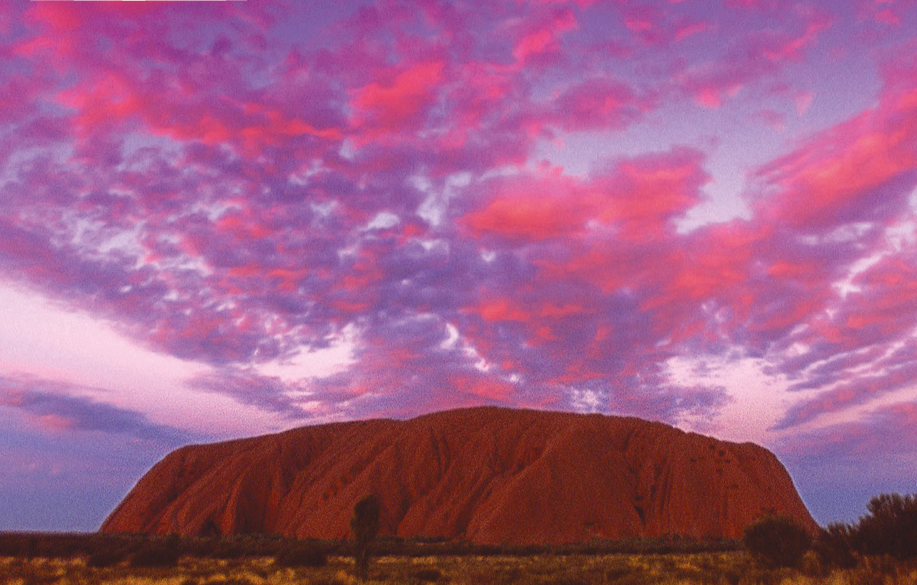
The park’s landscape is dominated by the iconic formations of Uluru and Kata Tjuta. Uluru is made from sedimentary rock called arkose sandstone. It is 9.4 kilometres in circumference and rises about 340 metres above the surrounding plain. Kata Tjuta comprises 36 rock domes of varying sizes made from a sedimentary rock called conglomerate. One of the domes, rising about 500 metres above the plain (or 1,066 metres above sea level), is the highest feature in the park.
The park is home to a particularly rich and diverse number of arid environment species, most of which are unique to not only Australia but the habitat of the park. Uluru and Kata Tjuta provide runoff water which finds its way into gorges and drainage to support flora and fauna in an otherwise arid environment.



The Event is to be organised by Dorcas ACTS and is intended to be an on-going event, possibly at different venues, occurring every year or two.
The Walk in the Spirit 2026 event is a nationwide charity initiative centred on a flagship 11 km walk around Uluru on Monday, 5 October 2026.
Aspley Uniting Church
748 Robinson Rd W, Aspley QLD 4034
contact@spiritwalker.org.au
chairperson@dorcas.org.au
Contact Us
The event’s purpose is to raise funds for Dorcas ACTS.
Dorcas ACTS provides rapid compassionate financial support to individuals in times of natural disasters and crisis.